
How to Choose & Display Art in Your Home
The art you choose is essential to pulling a room together — but sometimes it feels impossible to get the look you're going for. Many people treat artwork like an accessory to furniture, but it means so much more than that. Art reflects your tastes and personality, so it's worth finding the perfect piece and placing it in just the right spot.
Think about how important your collection of paintings, photographs, sculptures and canvases is to you every time you see them. Your art collection becomes a personal tapestry of your interests and aesthetic beliefs.
Before you start shopping, consider which mediums you prefer and what style speaks to you. If you want your home to look stunning and cohesive, it's important to know exactly what you're looking for. The goal isn't to fill wall space — artwork should enhance the colours in your rugs, fabrics, walls and lighting
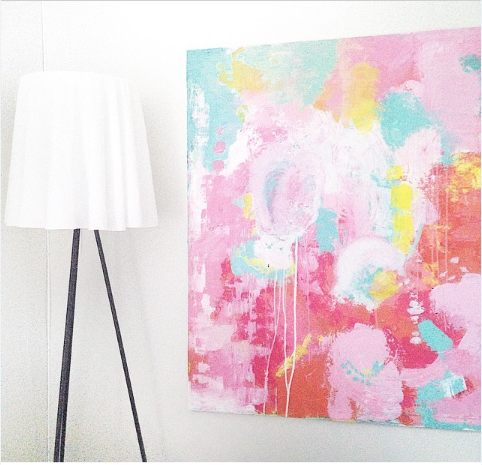
Colourful abstract painting next to modern tripod floor lamp in living room
Dare to Be Edgy
Hang your art at eye level where everyone can see it, not out of sight. Good artwork should be the focal point of your room, not something thrown in at the last minute. Be bold with frame choices — simple plexiglass or acrylic frames can look stunning. Keep artwork about 15-30cm above furniture for the best visual impact.
If you can't afford a large investment piece, use several smaller affordable pieces you love. Re-framing artwork can make a huge difference to how it fits your decor. A lively wall gallery can help anchor your space, and artworks by the same artist create a cohesive, curated feel.
You can also use art to highlight your favourite colours — red tones in artwork can draw out reds in a rug, or blues can complement soft blue furniture.
Make Art Your Starting Point
If art is an extension of yourself, try using a statement piece as your design starting point. Build the room around it rather than the other way around. This makes your artwork shine and creates a more cohesive space.
Find a show-stopping centrepiece to draw attention, then match colours and tones throughout the room. Artwork is the personality of your home — buy what you love and don't overthink it.
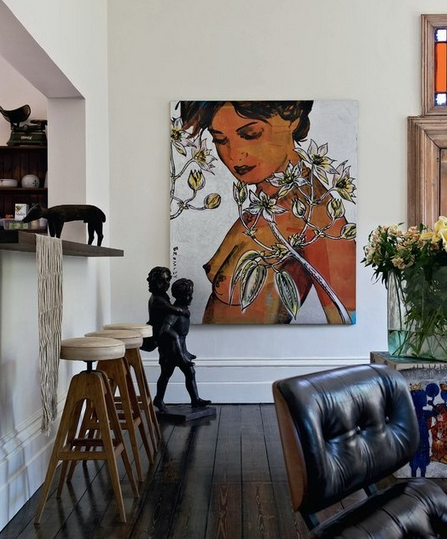
Statement portrait artwork in modern living space with leather chair and timber floors
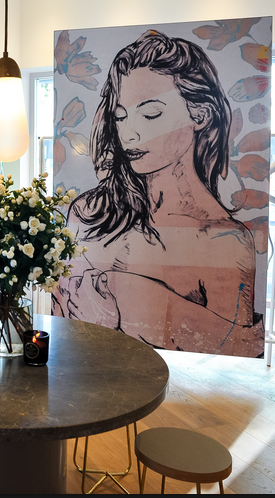
Large portrait artwork with floral details in modern dining space
Tips for Displaying Art
Framing matters — The frame is part of the artwork. It can make or break how the piece fits in your room, regardless of how much you spend.
Placement is key — Don't hang things too high or too far apart. Consider the size of the wall. Use paper templates and painter's tape to plan your layout before hanging.
Build a collection over time — You don't need to buy everything at once. Take your time, find pieces you love, and enjoy the hunt.
Some Good Rules to Follow
Framing matters — The frame is part of the artwork. A big part of what makes your art work is how you frame it. No matter how much you spend, your frame can make or break the artwork and its place in the room.
Placement is key — How you design and hang your artwork has as much impact as the art itself. Don't hang things too high or too far apart, and consider the size of the wall. Use cardboard paper and painter's tape to plan your layout before committing. Go asymmetrical or in a grid — it will look amazing when you've planned it out.
Build a collection over time — You aren't going to buy every painting out there. Take your time and pick up your favourites. Buying art just to have more art is counterproductive. Find things you love and enjoy the hunt.
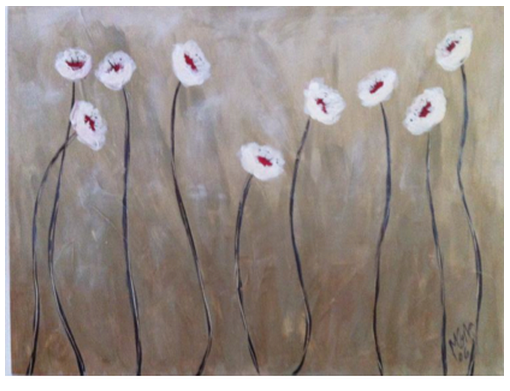
Abstract floral artwork with white flowers on a neutral background
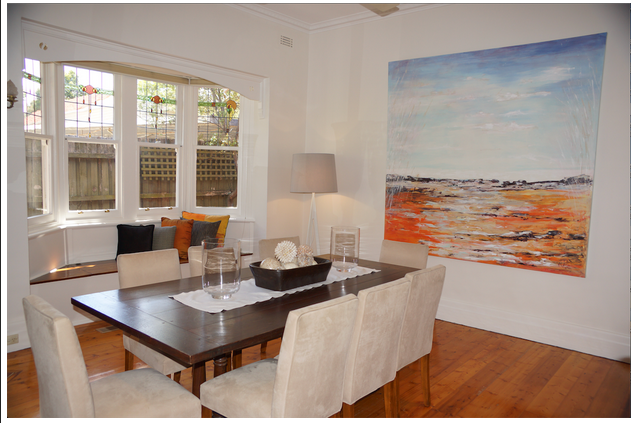
Abstract coastal landscape painting in elegant dining room with bay window